Industrial and Distribution Roofs
Large roofs can have long seams, multiple equipment zones, extensive drains, repair history, and service paths. The inspection needs to divide the roof into useful condition areas.
Commercial Roof Coating · Chandler, AZ
West Chandler Roof Coating is for commercial property owners and facility managers evaluating an existing roof across an industrial, distribution, office, mixed-use, and retail building environment. The first task is to inspect the roof assembly and details, then decide whether repair and restoration are suitable for the actual property.
Start With Roof Condition
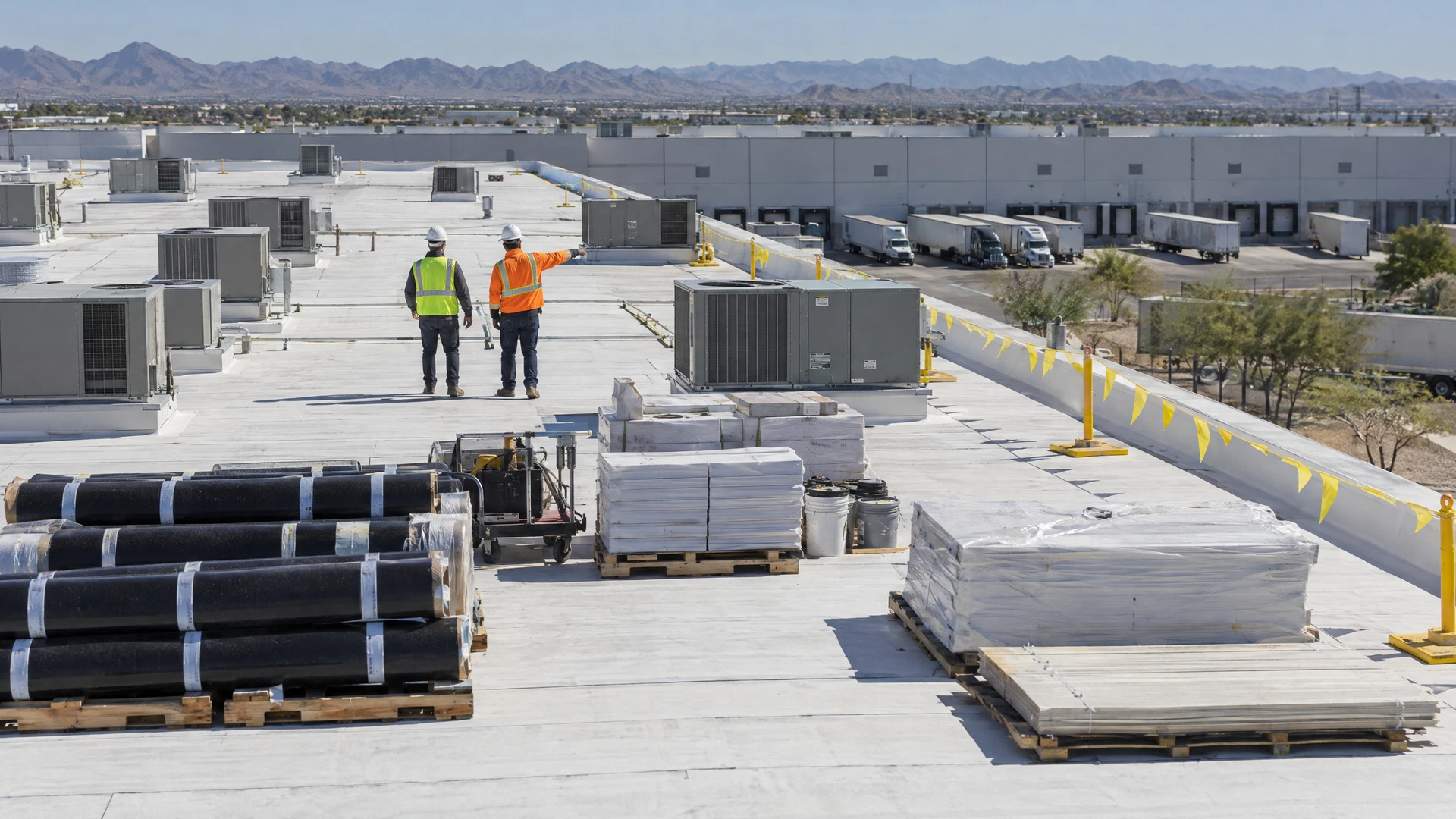
The City of Chandler describes West Chandler as its second-largest employment corridor, with large manufacturing facilities, mixed-use parks, office, industrial, and retail space. It also provides commercial-design guidance for roof-mounted mechanical equipment and roof access. Those facts make equipment, service paths, and building operations meaningful planning topics.
Local planning reference: City of Chandler West Chandler Business District.
Large roofs can have long seams, multiple equipment zones, extensive drains, repair history, and service paths. The inspection needs to divide the roof into useful condition areas.
Occupied spaces may have more tenant, customer, access, parking, noise, odor, and delivery considerations. The work plan should be built around real property constraints.
Curbs, ducts, vents, pipes, drains, ladders, access routes, and equipment service clearances create roof details that need specific treatment and future access.
A coating cannot repair structural failure, conceal wet materials, secure loose metal, or replace a drainage plan. Those conditions need a candid separate decision.
Inspection Detail
For West Chandler Roof Coating, the roof walk connects industrial and distribution roofs, office, mixed-use, and retail roofs, rooftop mechanical equipment, and system limits. A roof field can look serviceable from the ground while the water entry or repair boundary sits at a curb, drain, edge, seam, fastener, or equipment transition. Dividing the roof into field areas and detail zones helps place repair work where it belongs before a coating system is considered.
The material decision stays tied to what is actually on the building. The selected system needs a stable surface, an honest repair scope, workable access, and conditions that meet its product requirements. When a roof has more than one material or repair history, the review can identify where preparation changes between sections rather than treating the whole property as one surface.
Restoration Decision
Coating benefits should be tied to a roof that is actually ready for the selected work. Preparation, repair, drainage, system fit, application, and future maintenance remain part of the result.
An assembly-first review helps a West Chandler facility compare roof restoration with other roof work without assuming a material is right because the property is industrial or commercial.
On a qualified roof, a coating system can be considered as a restoration layer over prepared surface areas while repair and detailing work address the roof’s vulnerable transitions.
Planning around equipment and access can make the roof discussion more useful for facility operations, future maintenance, drains, walk paths, equipment curbs, and rooftop service needs.
System Selection
Commercial Roof Coating Options for Chandler include metal coating, silicone coating, acrylic coating, spray foam roofing, and shingle roof evaluation. West Chandler building mix does not make any one of these universal. Metal assembly condition, membrane compatibility, ponding, prior coatings, access, repair history, and product directions still control the system review.
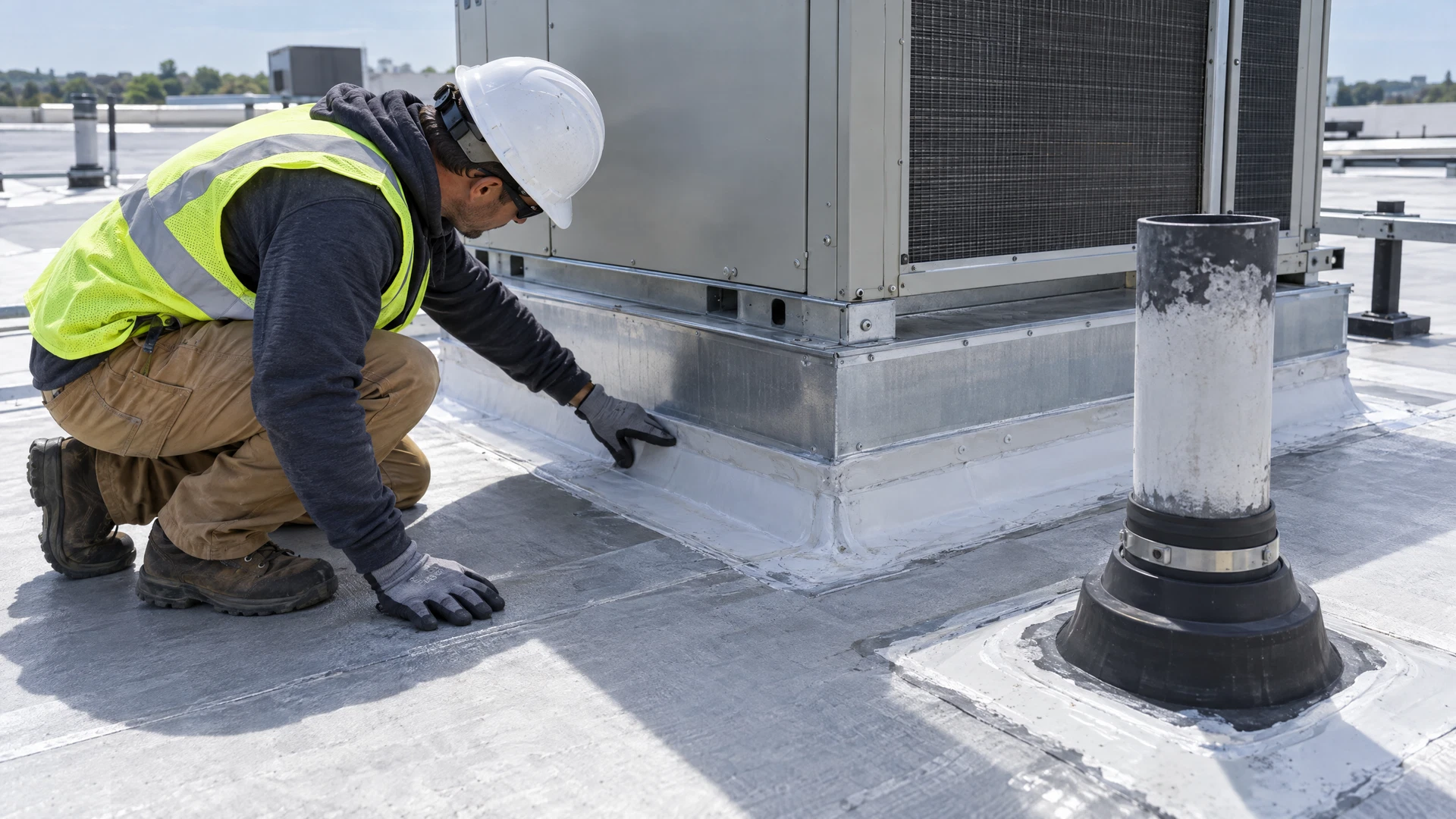
Large roofs can have long seams, multiple equipment zones, extensive drains, repair history, and service paths. The inspection needs to divide the roof into useful condition areas. The selected material also needs to account for office, mixed-use, and retail roofs and rooftop mechanical equipment.
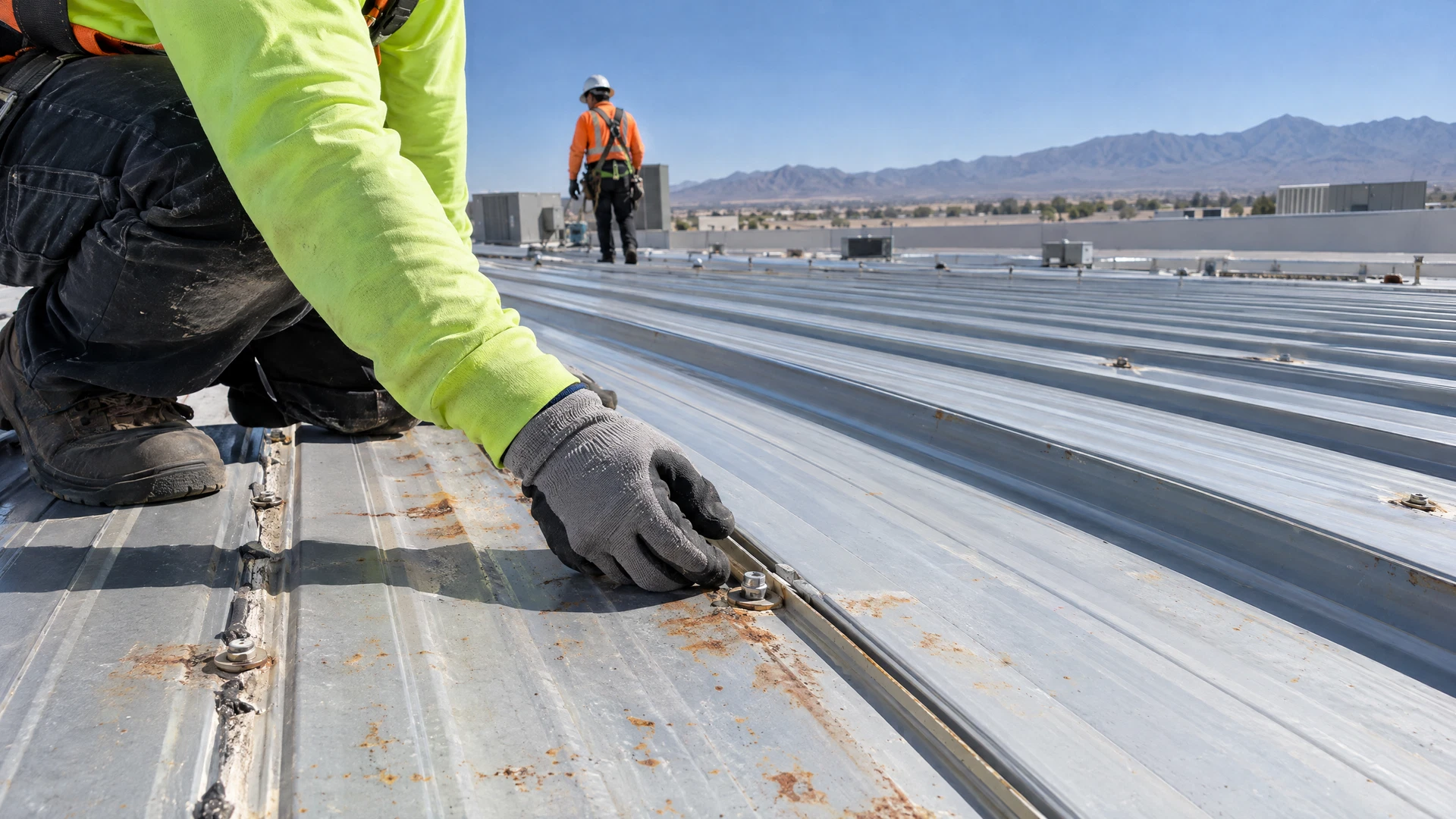
For commercial metal panels with seams, fasteners, corrosion, and penetration details that need review before restoration.
For suitable low-slope roof assemblies where substrate condition, drainage, and detail work guide the system choice.
For compatible commercial roofs that need a product-specific review of surface preparation, weather, and reflective finish options.
For a spray-applied roofing system that requires controlled substrate preparation, equipment protection, and a protective topcoat.
For a careful commercial assembly review when asphalt shingles or another shingle-like surface is part of the roof decision.
Work Sequence
The scope starts with the roof you have and follows a clear sequence through inspection, repairs, preparation, detailing, and system-specific application.
Map the assembly, roof sections, water entry, drains, seams, fasteners, flashing, curbs, penetrations, equipment, roof traffic, access points, and known repair areas.
Decide whether the roof is dry, stable, repairable, and compatible with a system review. Flag wet, damaged, unstable, or unsupported areas before product selection.
Repair and clean the selected roof sections. Address panels, fasteners, seams, flashings, curbs, drains, penetrations, and equipment interfaces with compatible work.
Plan around service clearances, roof access, ladders, loading, occupied spaces, air intakes, protected areas, staging, and equipment needs.
Use the selected system requirements for application and check the finished roof’s coverage, details, drain paths, equipment access, and future observation points.
Active Property Planning
Chandler’s commercial site-development guidance addresses roof-mounted mechanical equipment and internal roof-access ladders. That does not determine requirements for every existing roof-coating project, but it supports an early access-and-equipment map for commercial planning.
The City reports 845 businesses and 27,610 jobs in West Chandler. Those figures describe the corridor and do not describe a particular roof, contractor, schedule, or outcome.
Common Roof Questions
The answer depends on the roof assembly and conditions. These questions help identify what should be inspected before work is selected.
No. Leaks can involve seams, panels, flashing, penetrations, drains, curbs, equipment, condensation, substrate damage, or moisture. The source needs inspection before a restoration decision.
No. Metal condition, fasteners, seams, corrosion, panel movement, cleaning, adhesion, details, slope, and the selected product instructions need review first.
Curbs, flashing, drains, pipe penetrations, service routes, air intakes, equipment clearances, water flow, and the detail plan should all be reviewed.
A selected system may be considered after evaluation, but ponding should prompt review of drainage, roof condition, details, and system limitations. Coating does not automatically alter the slope.
No. Shingle assemblies require their own manufacturer-led compatibility review and should not be treated like metal or low-slope membrane roofing.
Commercial Properties Only
Discuss the commercial roof, known problem areas, equipment access, drainage, and building schedule. The selected work follows the roof inspection and system requirements.