Fasteners and Panel Connections
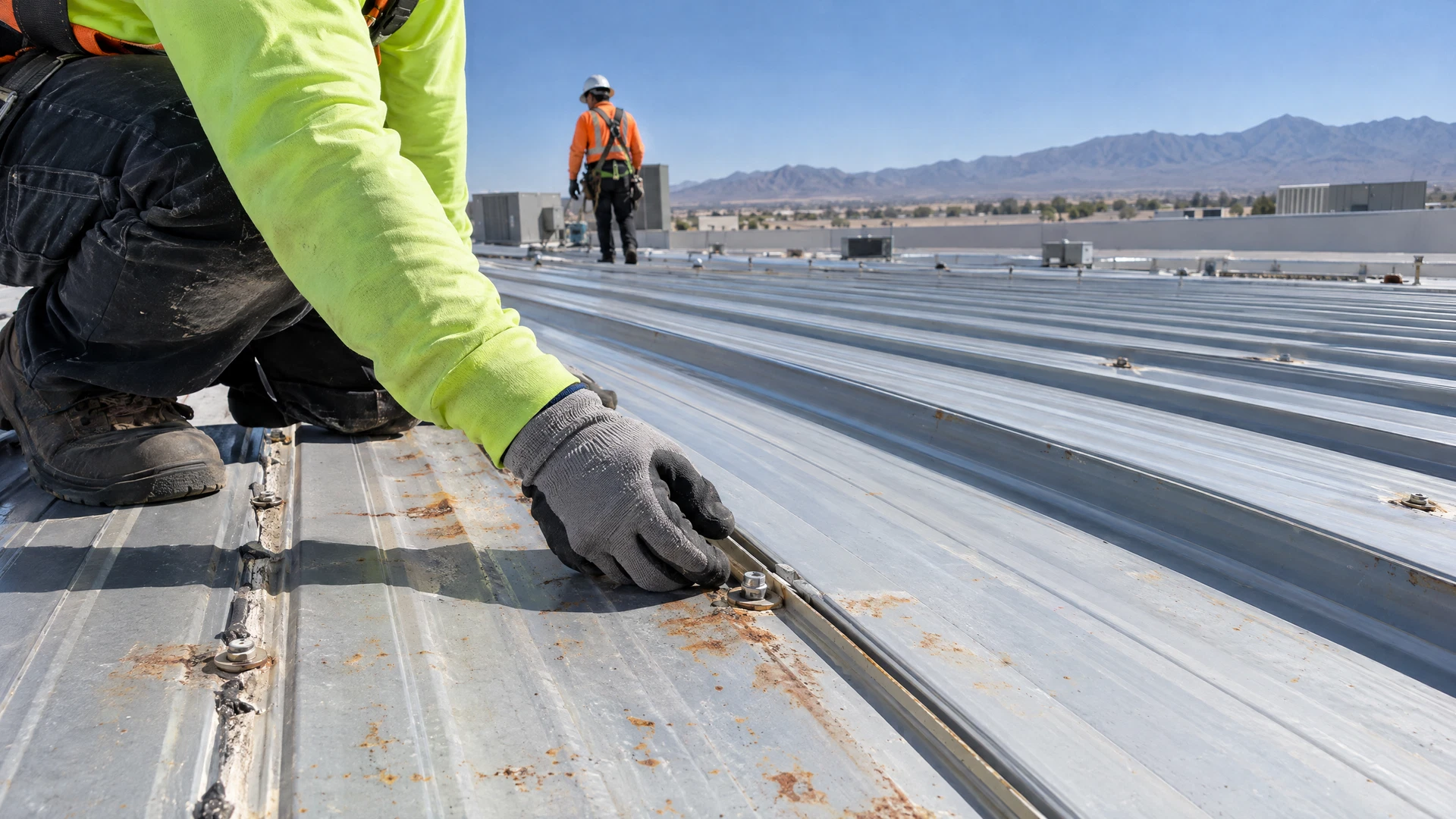
Loose or missing fasteners can allow movement and water entry at metal panels. They need correction before a coating system is expected to bridge and protect the roof surface.
Commercial Roof Coating · Chandler, AZ
Metal roof coating is considered after the commercial panels, seams, fasteners, corrosion, penetrations, drains, and equipment details are reviewed. A coating system can protect a prepared metal roof surface, but it is not meant to hold loose sheet metal together or cover over active repair needs.
Start With Roof Condition
The key decision is restoration readiness. A metal roof that is clean, dry, structurally serviceable, and repairable may be a candidate for coating. Severe corrosion, failing panels, persistent leaks, unresolved drainage, or weak connections can require repair or a different roofing decision first.
Loose or missing fasteners can allow movement and water entry at metal panels. They need correction before a coating system is expected to bridge and protect the roof surface.
Surface corrosion and isolated defects should be evaluated for repairability. Rusted-through sections, unstable metal, or damage at edges and laps need more than a field coating.
Standing seams, horizontal laps, ridges, rake edges, and transitions can move differently from the roof field. The detail plan should follow the metal profile and selected system.
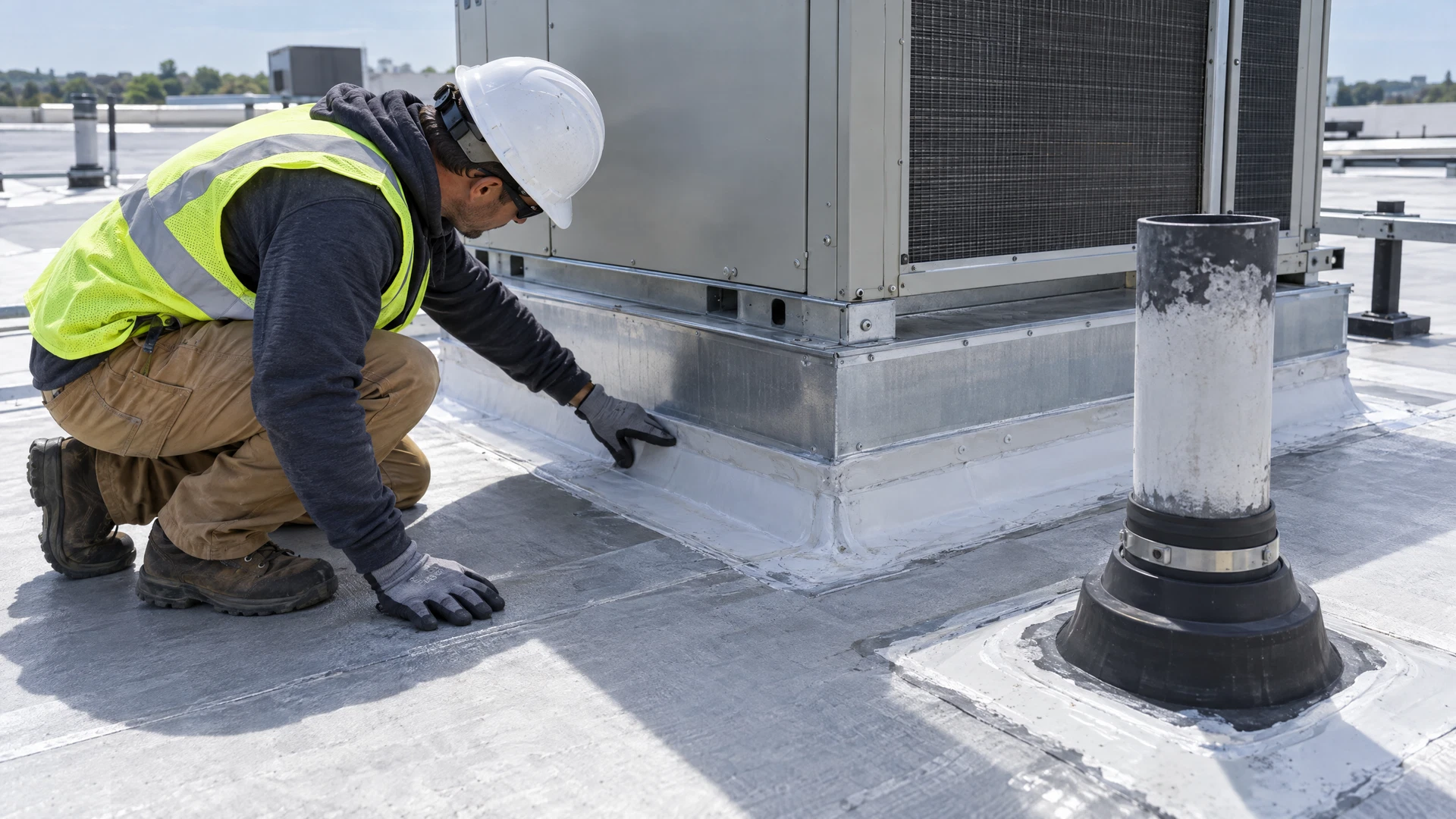
Rooftop units, pipe penetrations, curbs, drains, and scuppers interrupt the metal surface. These areas need inspection, access, and system-specific detailing.
Inspection Detail
For Chandler Metal Roof Coating, the roof walk connects fasteners and panel connections, corrosion and sheet metal, seams, ridges, and edges, and curbs, drains, and equipment. A roof field can look serviceable from the ground while the water entry or repair boundary sits at a curb, drain, edge, seam, fastener, or equipment transition. Dividing the roof into field areas and detail zones helps place repair work where it belongs before a coating system is considered.
The material decision stays tied to what is actually on the building. The selected system needs a stable surface, an honest repair scope, workable access, and conditions that meet its product requirements. When a roof has more than one material or repair history, the review can identify where preparation changes between sections rather than treating the whole property as one surface.
Restoration Decision
Coating benefits should be tied to a roof that is actually ready for the selected work. Preparation, repair, drainage, system fit, application, and future maintenance remain part of the result.
A suitable metal roof can be reviewed for restoration while much of the existing panel assembly remains in place. The panel condition and repair scope determine whether that approach is viable.
A liquid-applied layer can cover prepared roof field areas and help protect the metal surface from ordinary weather exposure. Details still require their own repair and treatment sequence.
A planned coating system can be matched to future maintenance access when rooftop units, service paths, drains, and edges are documented before application.
System Selection
Metal Roof Coating is the main route for commercial panels and standing-seam systems. Silicone and acrylic systems may be considered only when their product directions fit the prepared metal substrate. Spray Foam Roofing is a different system that needs its own design and substrate review. Shingle Roof Coating is not a substitute for metal restoration and requires its own assembly-specific check.
Loose or missing fasteners can allow movement and water entry at metal panels. They need correction before a coating system is expected to bridge and protect the roof surface. The selected material also needs to account for corrosion and sheet metal and seams, ridges, and edges.
For commercial metal panels with seams, fasteners, corrosion, and penetration details that need review before restoration.
For suitable low-slope roof assemblies where substrate condition, drainage, and detail work guide the system choice.
For compatible commercial roofs that need a product-specific review of surface preparation, weather, and reflective finish options.
For a spray-applied roofing system that requires controlled substrate preparation, equipment protection, and a protective topcoat.
For a careful commercial assembly review when asphalt shingles or another shingle-like surface is part of the roof decision.
Work Sequence
The scope starts with the roof you have and follows a clear sequence through inspection, repairs, preparation, detailing, and system-specific application.
Review panel condition, corrosion, loose fasteners, open seams, ridges, edges, flashings, drains, curbs, penetrations, rooftop units, water paths, and safe access.
Determine whether the roof is clean, dry, tight, and sufficiently sound for a product-specific restoration review. Adhesion testing may be used when the system calls for it.
Correct defective sheet metal, fasteners, sealant, seams, and penetration details before coating. Address water paths and roof-unit interfaces as part of the scope.
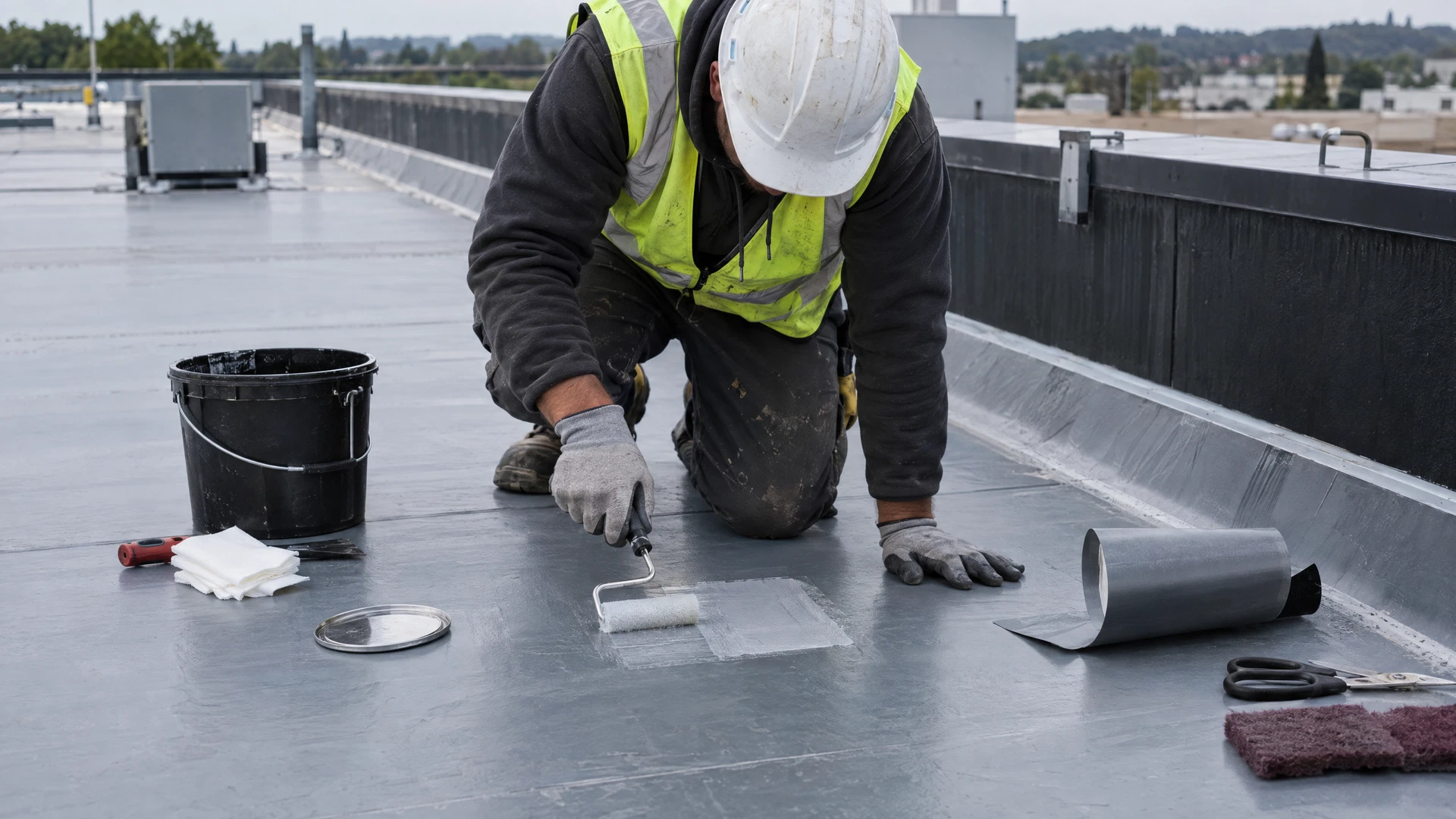
Remove contaminants and loose material as the selected system requires. Detail the identified seams, fasteners, curbs, penetrations, drains, and edges with compatible materials.
Follow the selected product guidance for application method, coverage, coat sequence, weather, and inspection. Keep equipment service and drainage paths accessible.
Active Property Planning
Metal restoration has to work around the building as well as the roof. Equipment maintenance, air intakes, rooftop service routes, hatches, loading areas, and protected spaces should be identified before materials are staged.
A roof unit can interrupt water flow and create a detail zone behind it. The roof review should include how water moves around equipment instead of assuming the field coating handles every transition.
Common Roof Questions
The answer depends on the roof assembly and conditions. These questions help identify what should be inspected before work is selected.
The leak source needs to be located and repaired first. Water can enter through seams, fasteners, flashing, penetrations, panel damage, or other roof details that a field coating does not diagnose.
Loose fasteners, damaged sheet metal, failed sealant, open seams, compromised flashing, penetrations, and drainage-related details should be addressed before the system is applied.
The metal profile and selected system determine which seams and transitions need detailed treatment. A standing-seam roof should not be treated as a flat, uniform surface.
Possibly, when the existing coating is identified, sound, compatible, and properly prepared. Adhesion and surface condition need review before a new material is selected.
It can. Equipment curbs, drain paths, penetrations, and areas where water is redirected need inspection before deciding how a metal roof can be restored.
Commercial Properties Only
Discuss the commercial roof, known problem areas, equipment access, drainage, and building schedule. The selected work follows the roof inspection and system requirements.