Dry and Sound Substrate
The roof deck or existing surface needs evaluation for moisture, adhesion, security, contaminants, loose material, and damage. Foam should not be sprayed over a wet or unstable base.
Commercial Roof Coating · Chandler, AZ
Spray Foam Roofing is a field-applied commercial roofing system, not a simple field coating. It requires a secure, dry, properly prepared substrate, controlled weather and overspray conditions, coordinated equipment access, and a compatible protective coating plan.
Start With Roof Condition
The right question is whether the roof and property can support a controlled SPF system. Wet or unstable surfaces, unresolved structural issues, inaccessible equipment zones, vapor-drive concerns, and uncontrolled spray conditions can point to repair, another system, or a different design decision.
The roof deck or existing surface needs evaluation for moisture, adhesion, security, contaminants, loose material, and damage. Foam should not be sprayed over a wet or unstable base.
A roof review can consider drainage paths and elevations, but a field-applied system is not a blanket promise to correct every water-management issue. The actual design controls.
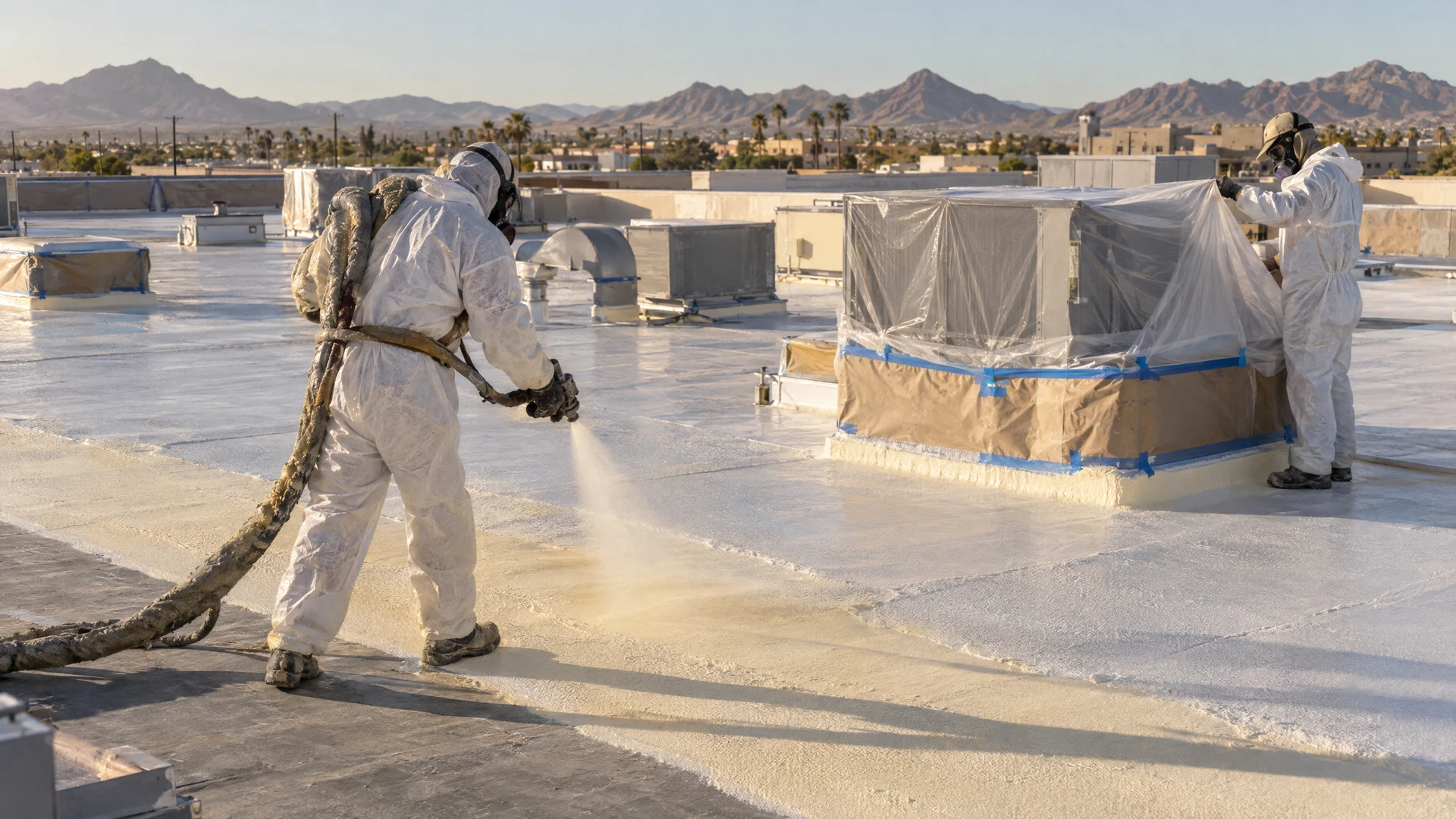
Spray work calls for protection of nearby surfaces, HVAC equipment, air intakes, vehicles, adjacent areas, occupants, and property operations.
Foam needs a compatible protective coating and ongoing observation of drains, equipment details, flashing, exposed areas, and mechanical damage.
Inspection Detail
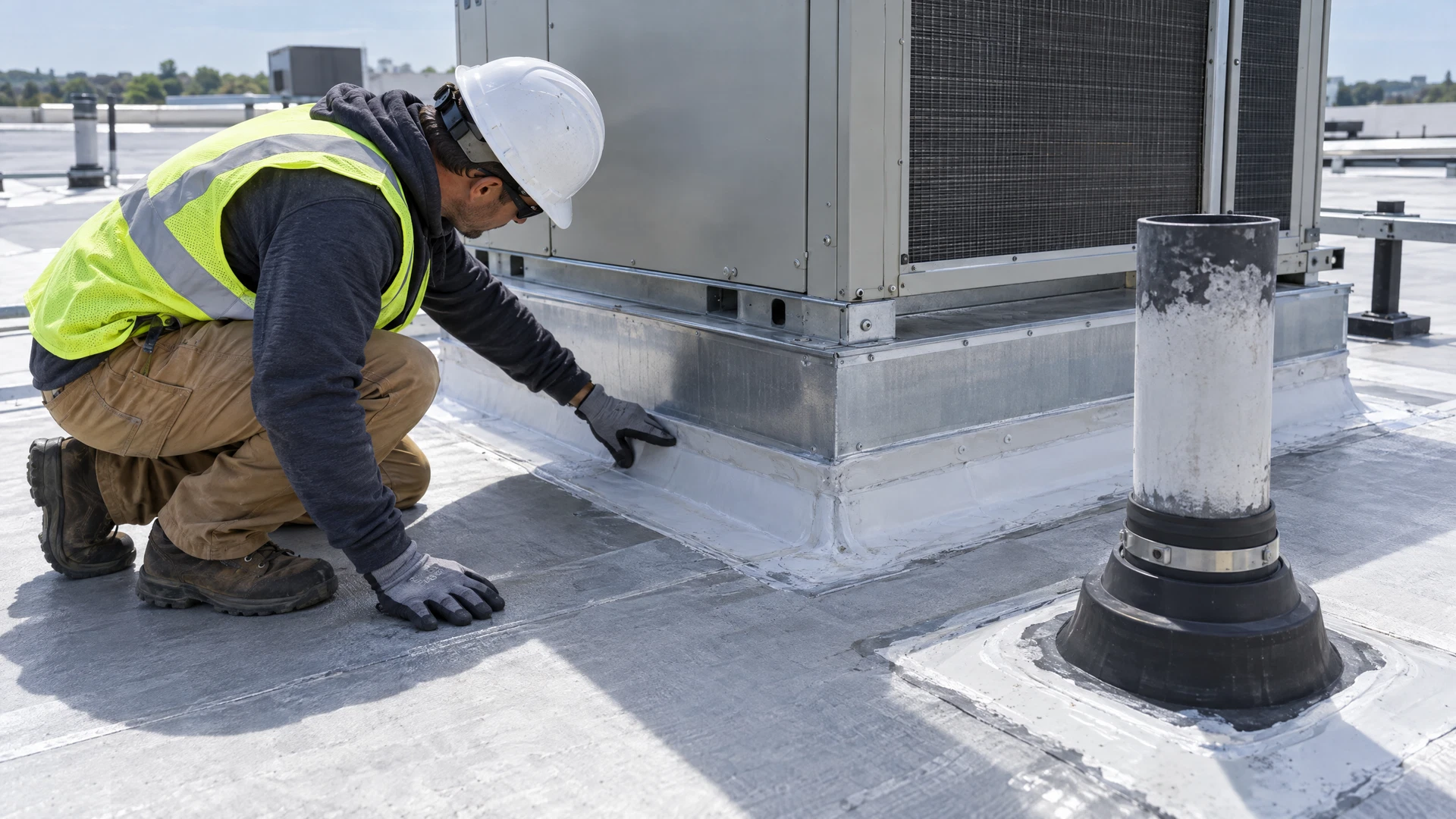
For Chandler Spray Foam Roofing, the roof walk connects dry and sound substrate, drainage and roof shape, overspray and ventilation, and protective coating and maintenance. A roof field can look serviceable from the ground while the water entry or repair boundary sits at a curb, drain, edge, seam, fastener, or equipment transition. Dividing the roof into field areas and detail zones helps place repair work where it belongs before a coating system is considered.
The material decision stays tied to what is actually on the building. The selected system needs a stable surface, an honest repair scope, workable access, and conditions that meet its product requirements. When a roof has more than one material or repair history, the review can identify where preparation changes between sections rather than treating the whole property as one surface.
Restoration Decision
Coating benefits should be tied to a roof that is actually ready for the selected work. Preparation, repair, drainage, system fit, application, and future maintenance remain part of the result.
An SPF roof system can be evaluated where a seamless, field-applied roofing approach fits the existing roof and property constraints. Its performance depends on design, preparation, application, protection, and maintenance.
A coating over foam is part of the system, not decorative finish work. It protects the foam from exposure and needs to be selected with the foam, roof details, and maintenance plan in mind.
A project-specific SPF review can bring substrate condition, access, equipment, protection, and future roof-service needs into one scoped discussion before application begins.
System Selection
Spray Foam Roofing is distinct from Metal Roof Coating, Silicone Roof Coating, Acrylic Roof Coating, and Shingle Roof Coating. Silicone or acrylic may be used as selected protective layers in some foam systems, but that does not make every coating decision an SPF decision. The existing assembly determines which route can be explored.
The roof deck or existing surface needs evaluation for moisture, adhesion, security, contaminants, loose material, and damage. Foam should not be sprayed over a wet or unstable base. The selected material also needs to account for drainage and roof shape and overspray and ventilation.
For commercial metal panels with seams, fasteners, corrosion, and penetration details that need review before restoration.
For suitable low-slope roof assemblies where substrate condition, drainage, and detail work guide the system choice.
For compatible commercial roofs that need a product-specific review of surface preparation, weather, and reflective finish options.
For a spray-applied roofing system that requires controlled substrate preparation, equipment protection, and a protective topcoat.
For a careful commercial assembly review when asphalt shingles or another shingle-like surface is part of the roof decision.
Work Sequence
The scope starts with the roof you have and follows a clear sequence through inspection, repairs, preparation, detailing, and system-specific application.
Assess deck or substrate condition, existing foam if present, moisture, drainage, roof geometry, flashing, drains, curbs, penetrations, rooftop equipment, access, and operating constraints.
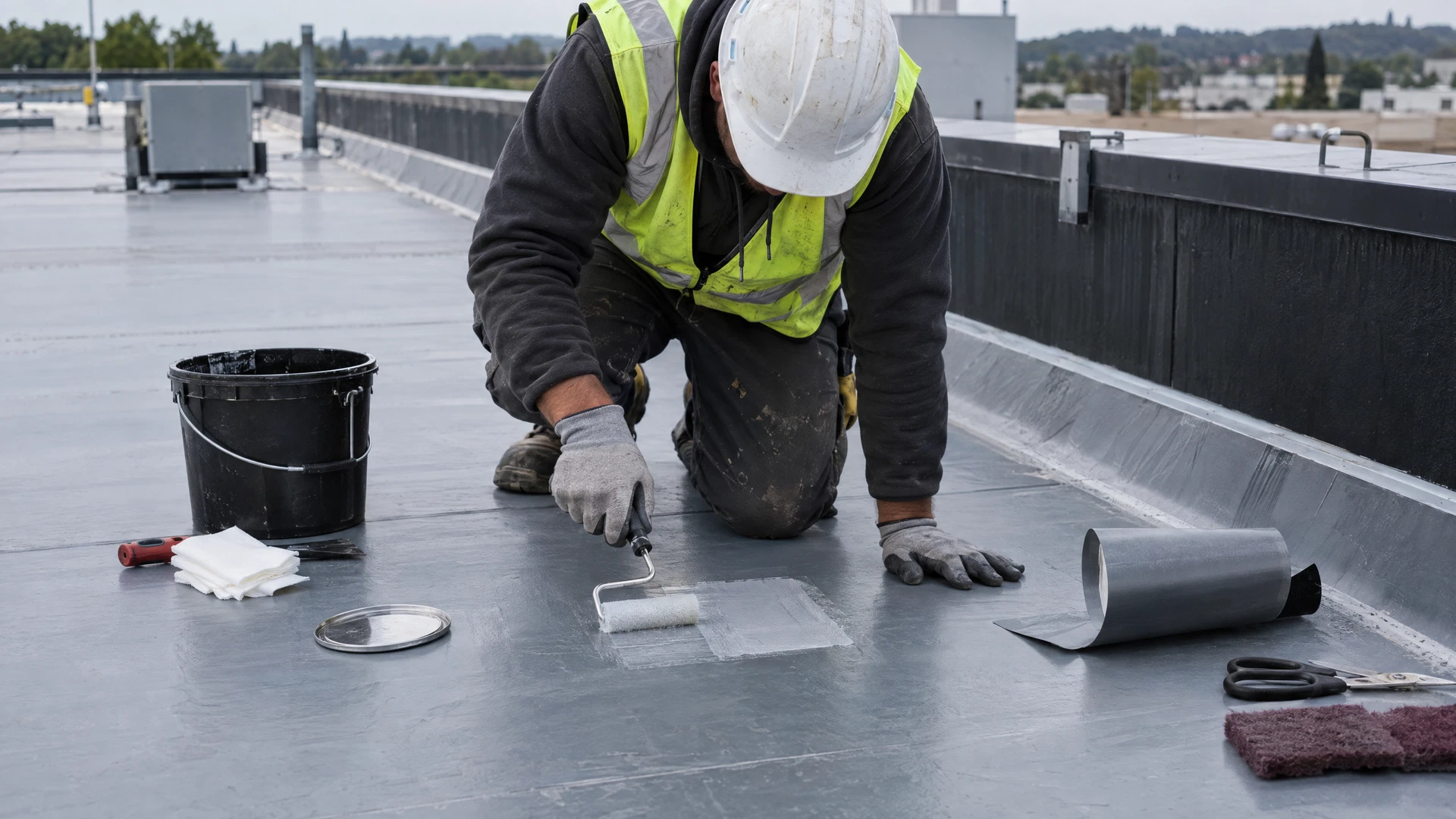
Remove or repair wet, loose, damaged, contaminated, or insecure material. Complete required structural, drainage, flashing, and penetration work before foam application.
Confirm product weather limits and set controls for wind, overspray, ventilation, rooftop access, adjacent property, vehicles, air intakes, and occupant protection.
Use controlled passes and the selected system requirements for equipment, proportioning, thickness, transitions, and quality checks.
Complete required flashings and transitions, add the compatible protective coating, review roof details, and document areas that need future observation or maintenance access.
Active Property Planning
Rooftop mechanical equipment is especially important on a spray project. Units, ducts, curbs, pipe penetrations, service clearances, air intakes, and electrical equipment need a protection and access plan before equipment is positioned.
A facility that operates during roof work needs clear limits around staging and rooftop traffic. Some restrictions may be needed, and the exact plan should follow the property and system scope instead of a blanket disruption promise.
Common Roof Questions
The answer depends on the roof assembly and conditions. These questions help identify what should be inspected before work is selected.
No. Moisture and unstable material need to be identified and addressed before a spray-applied system is considered. The substrate has to be dry, sound, and prepared for the system.
Foam thickness can be part of a project-specific roof design, but drainage needs evaluation. It should not be presented as an automatic correction for every low area or water problem.
Equipment, curbs, ducts, intakes, service paths, and clearances must be mapped. Overspray, ventilation, access, and protection are controlled as part of the project plan.
The protective coating is part of the roof system. It helps shield the foam from exposure and must be compatible with the specified foam, details, and maintenance approach.
Wet or unstable substrates, unresolved structural problems, inaccessible work zones, uncontrolled overspray conditions, and certain vapor-drive situations can require another roofing decision.
Commercial Properties Only
Discuss the commercial roof, known problem areas, equipment access, drainage, and building schedule. The selected work follows the roof inspection and system requirements.