These answers cover commercial roof condition, system selection, preparation, rooftop equipment, water, operations, and Chandler permit coordination. The final scope still depends on the actual roof and selected system requirements.
Commercial Properties OnlyInspection Before Final ScopeRoof Systems Reviewed by ConditionChandler and Approved Nearby Areas
Roof Condition, Preparation, And Planning
Chandler Roof Coating FAQ Answers
The question list is grouped so a property owner or facility manager can find the roof issue that needs attention. The answers focus on the roof and the work, not form mechanics or proposal steps.
How Do I Know if My Chandler Commercial Roof Is Worth Coating?
If the surface is still stable, the insulation is dry, and most problems can be repaired, coating may be a good option. If the roof is badly damaged or holding a lot of moisture, coating may not be the right move.
Can a Roof Be Too Old to Coat?
Yes, but age alone does not decide it. Some older roofs are still in good enough shape to restore, while newer roofs can have serious damage. Roof condition, moisture level, and how well the existing material is holding up matter more.
What if We Only Have a Few Leaks?
A few leaks do not always mean the whole roof needs coating. The inspection looks at where water is getting in and whether the issue is local or spread across the roof. Repairs can be enough, or repeated leaks can show a broader issue.
Can You Tell if Coating Is Better Than Replacement?
That is part of the inspection. If most of the roof can stay in place and be repaired, coating may make sense. If too much of the roof is wet, weak, or failing, replacement may be a better choice.
Inspecting The Existing Roof
What Areas Do You Check First?
Seams, flashing, drains, roof edges, old patches, and areas around HVAC units and other rooftop equipment are common places for water entry or failing repairs.
Why Do Old Patches Matter?
Old patches can hide problems underneath. Some remain solid, while others crack, lift, or trap moisture. The roof review determines whether they can remain or need replacement before coating.
What Does Bubbling or Blistering on the Roof Mean?
Bubbles can point to trapped air or moisture under roofing material. They need review before coating because covering them without finding the cause can leave the same problem under the new surface.
What if the Roof Has Different Materials in Different Areas?
That is common on buildings that have been expanded or repaired over time. Each section may need different preparation, repair materials, or a different coating system based on what is actually there.
Commercial Roof Coating Options For Chandler
How Do You Choose Between Silicone and Acrylic?
Drainage, roof material, previous coatings, and standing water all matter. Silicone may be considered where ponding water is a concern. Acrylic can work well on roofs that drain properly. Neither option is automatically right for every building.
Can a TPO Roof Be Coated?
Some TPO roofs can be coated, but the surface needs appropriate cleaning and preparation, and the coating must be approved for that use. Seams and repairs should be checked before a decision is made.
Can Modified Bitumen Be Coated?
Yes, in some cases. The roof needs to be stable, dry, and properly prepared. Depending on the material and coating, primer may also be needed.
Can a Metal Roof With Loose Fasteners Still Be Restored?
Possibly, but the fasteners and panel connections need to be fixed first. Coating should not be used to hold loose metal together. Mechanical problems need attention before coating.
Rooftop HVAC And Equipment
Why Are HVAC Areas Common Leak Points?
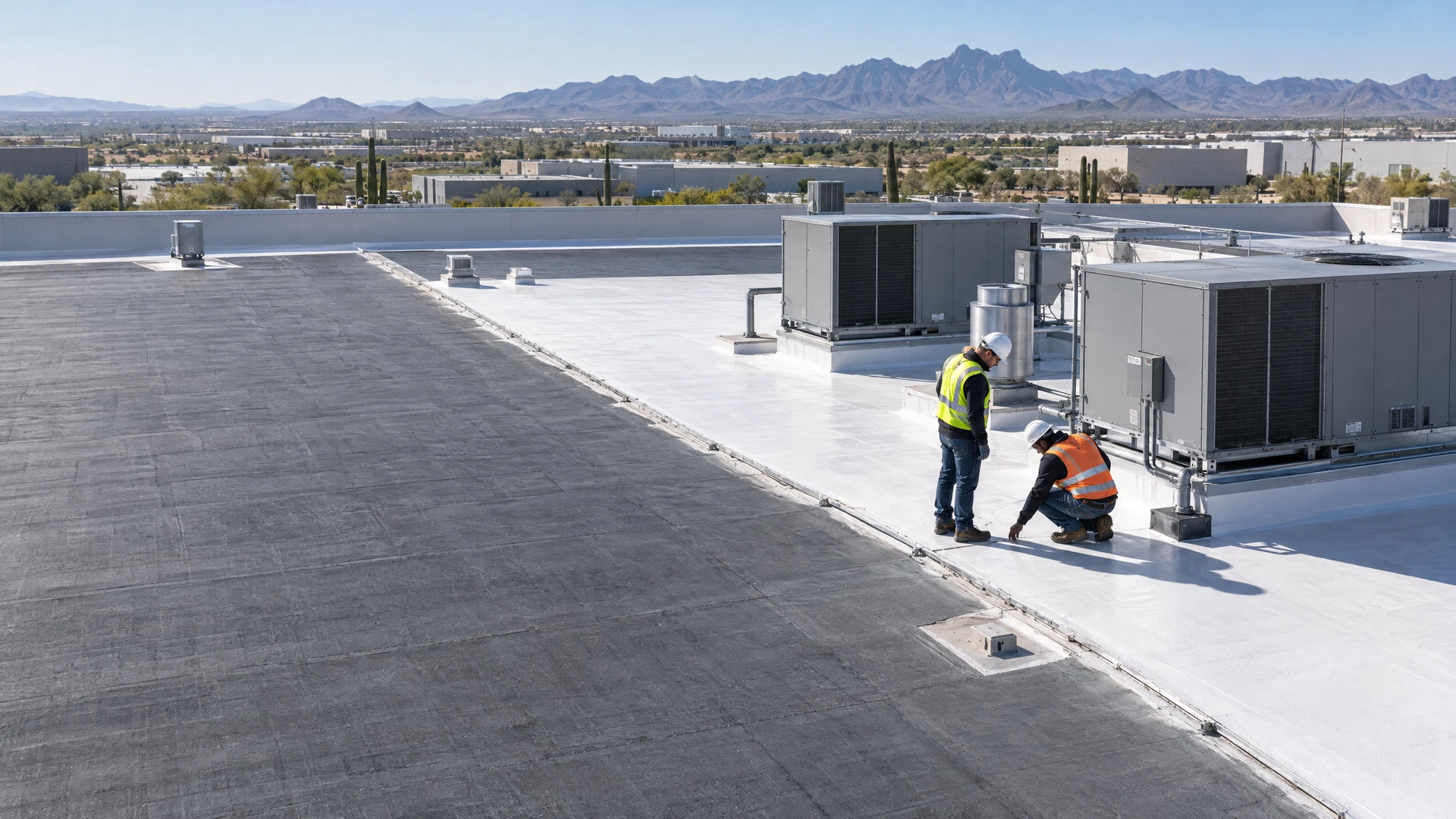
HVAC curbs, pipes, and service lines create breaks in the roof surface. Those areas also receive foot traffic from technicians, so seals, flashing, and nearby roof material need close inspection.
Can HVAC Technicians Keep Servicing Equipment After the Roof Is Coated?
Yes, but the coating needs protection from heavy or repeated traffic. Service paths or added protection can be considered around units that receive frequent maintenance.
What if an HVAC Unit Is Being Replaced Soon?
Raise that before roof work begins. It may make more sense to replace or move the unit first, so the roof does not need to be cut or repaired again immediately after coating.
Can Grease or Oil Around Rooftop Equipment Affect the Coating?
Yes. Grease, oil, and other residue can interfere with adhesion. Those areas need proper cleaning, and damaged roofing beneath may need repair.
Heat And Sun Exposure In Chandler
How Does Chandler Heat Affect a Commercial Roof?
Roof surfaces can become very hot during the day. Over time, heat can dry materials, weaken old repairs, and add stress to seams and flashing, so the inspection looks for those signs.
Can a Reflective Roof Coating Lower Roof Surface Temperature?
A reflective coating can reduce how much solar heat the roof absorbs and may lower roof surface temperature. The effect inside a building depends on insulation, HVAC systems, and the building itself.
Does a Cooler Roof Mean Lower Energy Bills?
It can help, but a fixed percentage should not be promised. Insulation, equipment efficiency, building hours, interior loads, and the selected roof system also affect energy use.
Does Extreme Heat Affect When Coating Can Be Applied?
Yes. Roof surfaces can be much hotter than the air. Work has to stay within the selected manufacturer’s application limits, so timing may need to avoid the hottest conditions.
Drainage And Water Problems
Why Does Water Stay on Some Flat Roofs?
Low areas, blocked drains, and changes in the roof surface over time can cause standing water. It should be checked because it can point to a drainage or roof-condition issue.
Can a Roof Coating Stop Ponding Water?
No. A coating may be selected for water exposure, but it usually does not fix the roof slope. Water that keeps collecting in one place may need separate drainage or roof work.
Are Roof Drains Part of the Inspection?
Yes. Drains, scuppers, and nearby roof areas should be checked for buildup, damage, and signs that water is not leaving the roof properly.
What if Water Is Getting in Around a Drain?
The drain connection may need repair before coating. The main roof surface should not be coated until the leak point has been handled correctly.
Preparing The Roof
What Happens Before the Coating Goes On?
The first step is Inspect Your Roof. After that, problem areas are repaired, the roof is cleaned, loose material is removed, and seams and penetrations are prepared. Primer is used only if the selected system calls for it.
Why Can’t You Just Coat Over Dirt and Dust?
The coating needs to bond to the roof itself. If dust or debris remains, the coating can bond to that layer instead of the roofing material.
Do All Roofs Need Primer?
No. Primer depends on the roof material and selected coating system. Some surfaces need it for adhesion or to block old asphalt from bleeding through.
Why Do Some Roofs Need Adhesion Testing?
A small test area can help confirm the coating will bond properly. It can also show when more cleaning, primer, or a different coating is needed.
Working Around An Active Property
Can a Commercial Building Stay Open During the Work?
Often, yes. The work can be planned around entrances, loading areas, tenant activity, and rooftop equipment. Short-term restrictions can still be needed depending on the actual roof work.
Can You Work Around Office or Industrial Schedules?
The work plan can account for shift changes, deliveries, customer traffic, and areas that cannot be blocked. Details provided early help coordinate the roof work with the building.
Will Roof Coating Create Strong Odors?
That depends on the product. Some coatings have more noticeable odors than others. Sensitive areas and air intakes near the roof should be included in the work plan.
Can Spraying Be Used Near Parking Lots?
Sometimes, but nearby vehicles and buildings need overspray protection. If spraying is not practical, another approved application method may be selected.
Benefits Of Coating Your Roof
What Are the Main Benefits of Coating a Commercial Roof?
For a suitable roof, coating can reduce the need for full tear-off, lower the amount of waste, cause less disruption, and allow the roof to remain in service longer. Some systems can be recoated later.
Is Coating Usually Cheaper Than Full Replacement?
It often can be when the existing roof is still worth keeping. A roof needing extensive repair can narrow that cost difference, which is why roof condition matters.
Does Coating Create Less Waste?
Yes, when most of the existing roof remains in place. Less roofing material then needs to be removed and hauled away.
Can the Roof Be Coated Again Years Later?
Often, a future recoat may be possible if the current system remains sound and compatible with the new material.
Permits And Local Requirements
Does Commercial Roof Work in Chandler Need a Permit?
It can. The City of Chandler Building Safety Division handles permits, plan review, and inspections for commercial construction work. The exact permit need depends on the project scope and should be confirmed before work begins.
Who Should Confirm Whether a Permit Is Required?
The City of Chandler Building Safety team is the right source for a final answer. The city provides a Plan Reviewer of the Day for questions about requirements.
Can Commercial Roof Work Be Inspected by the City?
Yes, when work is part of a permitted project. Chandler Building Safety staff conducts inspections for conformance with approved building plans.
Why Should Permit Questions Be Handled Before Work Starts?
Permit needs can affect timing, inspections, and how work is documented. It is better to confirm requirements before scheduling than after the work has started.
Start with the roof material, known leaks, water paths, repair history, equipment access, and building schedule. The selected work follows the inspection.