Active Water Entry
Recurring leaks may come from seams, flashings, drains, curbs, penetrations, damaged panels, or other roof details. The water path must be understood before a coating layer is considered.
Commercial Roof Coating · Chandler, AZ
San Tan Valley Roof Coating provides a commercial roof-condition discussion for properties in the approved coverage area. The roof walk separates field-surface issues that may be part of a restoration scope from active leaks, wet materials, drainage issues, structural concerns, and access limitations that need separate attention.
Start With Roof Condition
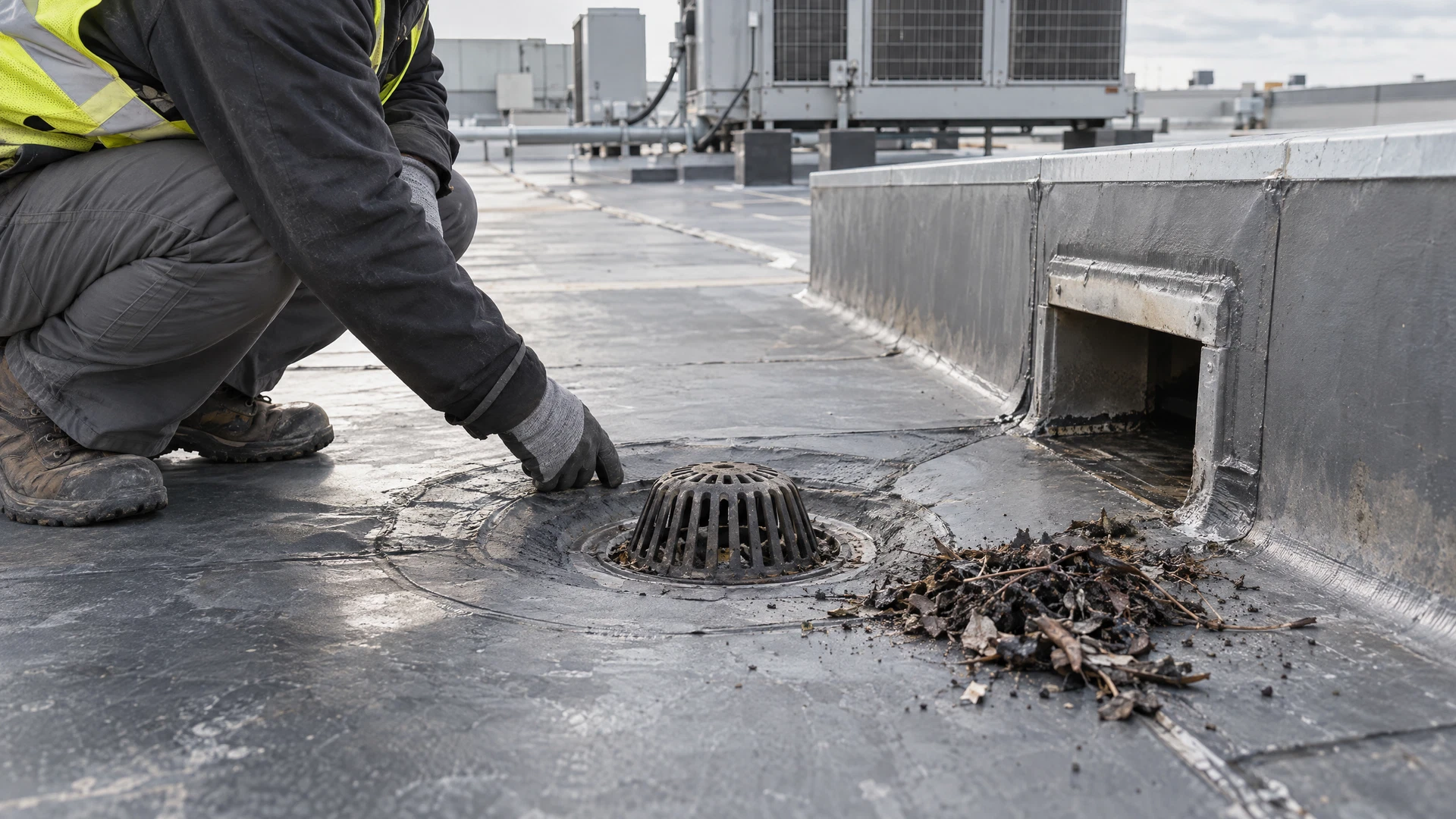
Pinal County Planning administers land-use regulations and reviews commercial site plans in applicable county jurisdiction. County floodplain guidance also notes that flooding can result from storms and overloaded drainage systems. Those county facts support a due-diligence conversation about water management; they do not identify any particular property as flood-prone or claim roof coating prevents flooding.
Local planning reference: Pinal County Planning.
Recurring leaks may come from seams, flashings, drains, curbs, penetrations, damaged panels, or other roof details. The water path must be understood before a coating layer is considered.
Moisture indicators, wet insulation, loose membrane, blisters, and suspect substrate areas can change the restoration decision. A new surface should not hide those conditions.
Roof drainage and site drainage are different systems, but both deserve practical attention. A coating is not presented as a cure for an overloaded drainage system or flood condition.
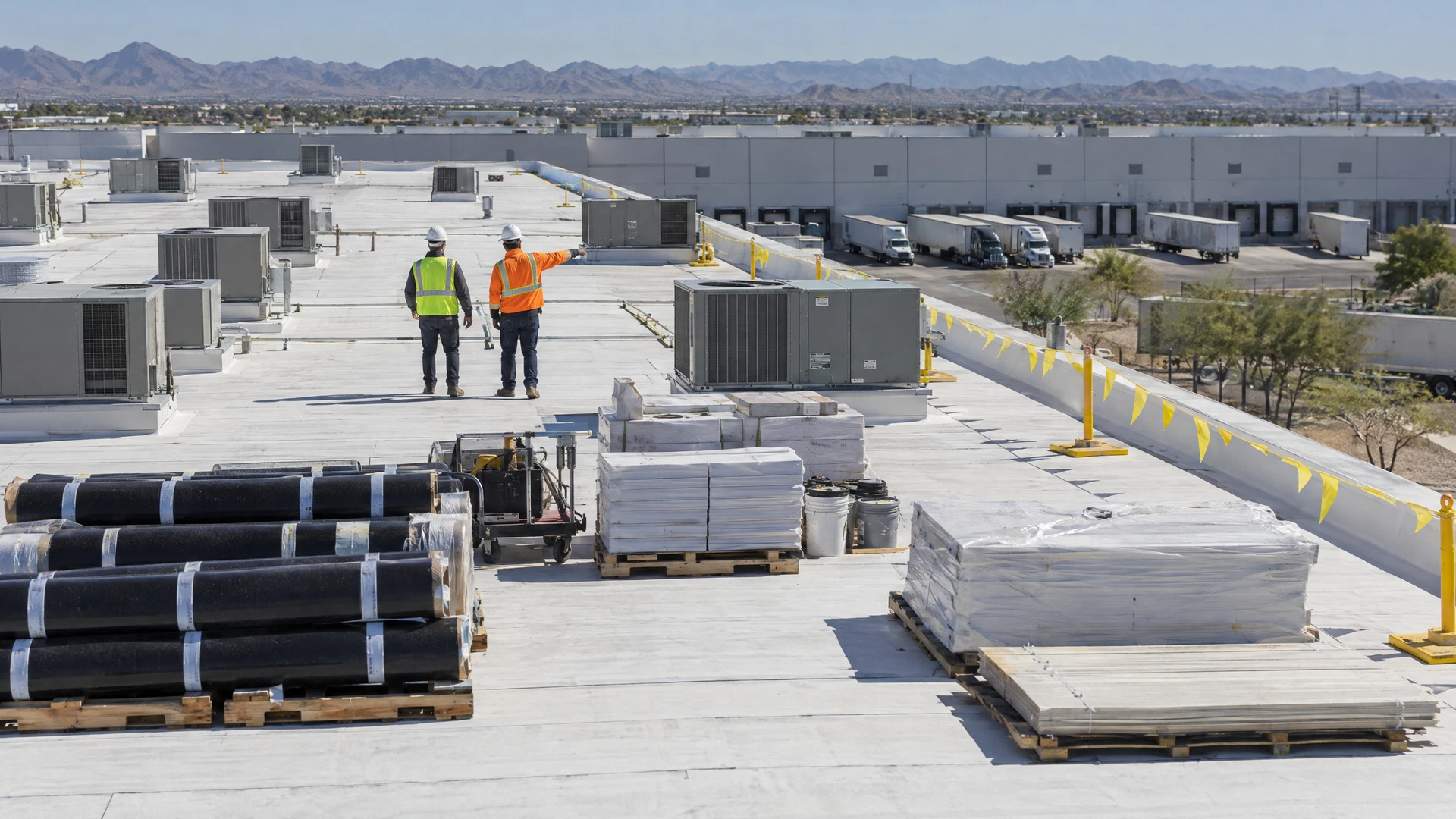
Equipment service, roof hatches, ladders, tenant needs, loading patterns, and protected areas need to be known before the work sequence is planned.
Inspection Detail
For San Tan Valley Roof Coating, the roof walk connects active water entry, wet or uncertain materials, site and roof drainage, and roof access. A roof field can look serviceable from the ground while the water entry or repair boundary sits at a curb, drain, edge, seam, fastener, or equipment transition. Dividing the roof into field areas and detail zones helps place repair work where it belongs before a coating system is considered.
The material decision stays tied to what is actually on the building. The selected system needs a stable surface, an honest repair scope, workable access, and conditions that meet its product requirements. When a roof has more than one material or repair history, the review can identify where preparation changes between sections rather than treating the whole property as one surface.
Restoration Decision
Coating benefits should be tied to a roof that is actually ready for the selected work. Preparation, repair, drainage, system fit, application, and future maintenance remain part of the result.
A roof-specific review can clarify whether an existing commercial assembly can be repaired and restored or whether moisture, damage, or water-management issues point to another path.
When a roof is an eligible candidate, restoration may reduce the amount of existing roof material that has to be removed. The actual repair scope controls whether that comparison is honest.
A well-defined coating scope can include preparation, seams, drains, curbs, equipment details, and access planning instead of treating the roof field as the entire problem.
System Selection
Commercial Roof Coating Options for Chandler include Metal Roof Coating, Silicone Roof Coating, Acrylic Roof Coating, Spray Foam Roofing, and Shingle Roof Coating. Each one starts with a material and condition review. Silicone or acrylic products are not automatically interchangeable. Spray foam requires a separate system decision. Shingle surfaces should not be assumed compatible without a manufacturer-supported approach.
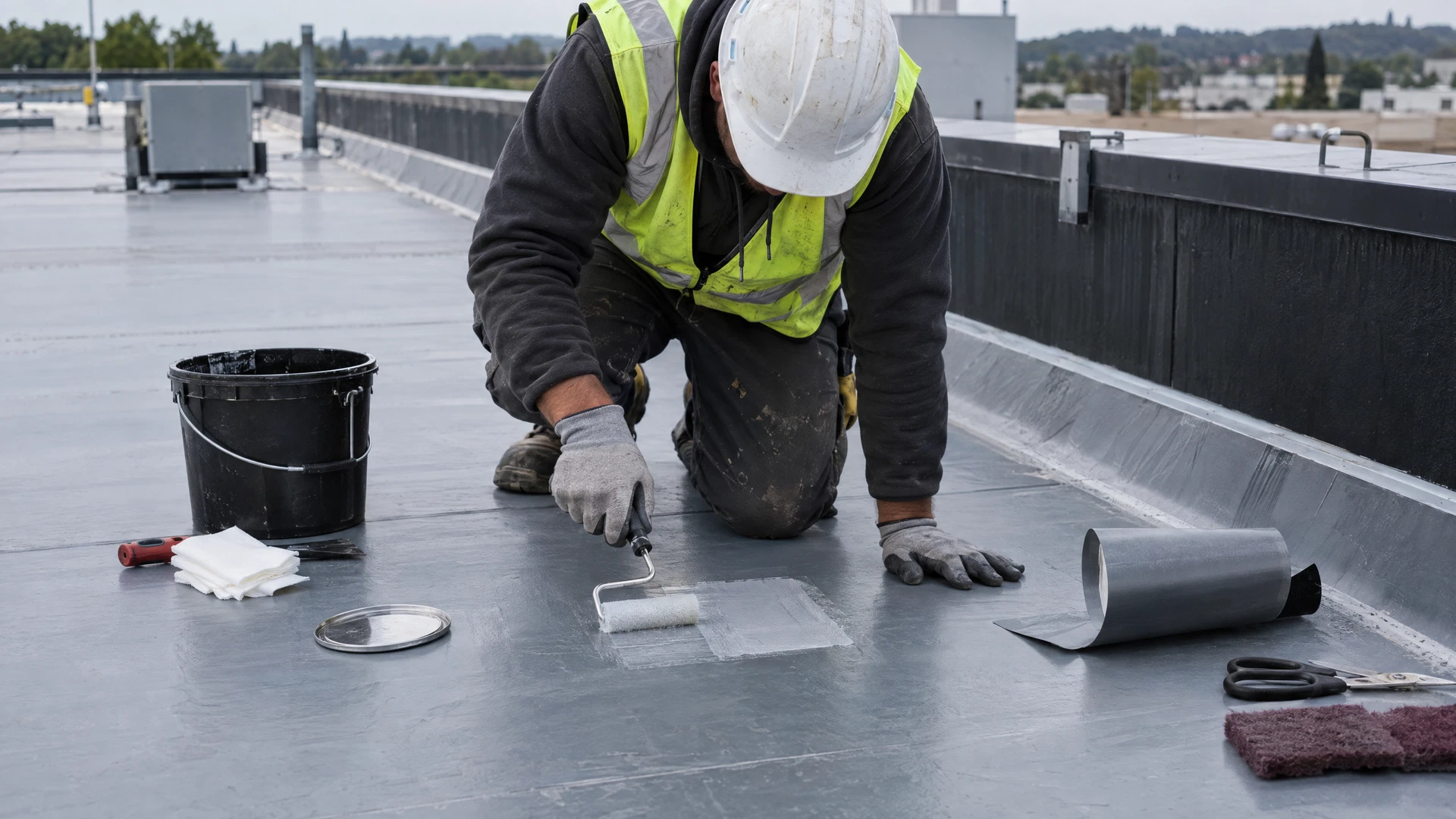
Recurring leaks may come from seams, flashings, drains, curbs, penetrations, damaged panels, or other roof details. The water path must be understood before a coating layer is considered. The selected material also needs to account for wet or uncertain materials and site and roof drainage.
For commercial metal panels with seams, fasteners, corrosion, and penetration details that need review before restoration.
For suitable low-slope roof assemblies where substrate condition, drainage, and detail work guide the system choice.
For compatible commercial roofs that need a product-specific review of surface preparation, weather, and reflective finish options.
For a spray-applied roofing system that requires controlled substrate preparation, equipment protection, and a protective topcoat.
For a careful commercial assembly review when asphalt shingles or another shingle-like surface is part of the roof decision.
Work Sequence
The scope starts with the roof you have and follows a clear sequence through inspection, repairs, preparation, detailing, and system-specific application.
Document the roof type, water entry symptoms, drains, scuppers, ponding, seams, fasteners, repairs, flashing, penetrations, equipment, access, and suspected moisture areas.
Determine whether the roof is dry, repairable, attached, and compatible with an evaluated system. Separate surface work from conditions that need more extensive repair.
Address damaged membrane or sheet metal, failed sealant, loose fasteners, flashings, drain connections, curbs, and penetration details before a field coating is considered.
Clean and dry the roof under the selected system requirements. Complete any needed primer, adhesion check, detail treatment, staging, and equipment-protection plan.
Follow the selected material’s guidance for weather, coverage, application method, cure, and inspection. Keep drainage and roof access in the closeout review.
Active Property Planning
The San Tan Valley context in the current research is county-wide rather than a local roof inventory. For that reason, the commercial roof review uses actual property conditions rather than assuming a uniform local building type, climate effect, or roofing condition.
Pinal County’s Site Plan Review Team provides guidance for commercial, industrial, multifamily, church, and school applicants. A roof project should confirm its governing jurisdiction and any applicable requirements rather than assume every property follows the same review path.
Common Roof Questions
The answer depends on the roof assembly and conditions. These questions help identify what should be inspected before work is selected.
The leak source should be found and repaired first. Coating does not identify whether water is entering through a seam, drain, flashing, curb, penetration, panel, or damaged substrate.
It means the roof and drainage need a closer review. The reason water remains, the roof condition, and the selected system requirements all affect the next step.
Wet or suspect areas need evaluation and the appropriate repair decision before coating. A new field layer should not trap an existing moisture problem in the assembly.
It should be planned for. Curbs, service routes, drains, pipe penetrations, walk paths, and equipment clearances need to be part of the roof scope.
Replacement or another roof strategy can be more appropriate when the roof has widespread wet materials, unstable substrate, structural issues, serious damage, unresolved leaks, or unsupported compatibility.
Commercial Properties Only
Discuss the commercial roof, known problem areas, equipment access, drainage, and building schedule. The selected work follows the roof inspection and system requirements.