Office and Campus Equipment
Office and campus roofs can include dense HVAC, telecom, pipe, curb, drain, and service-route details. A roof plan should preserve necessary maintenance access.
Commercial Roof Coating · Chandler, AZ
Price Corridor Roof Coating is written for commercial property decision-makers who need an assembly-first view of roof restoration. The City of Chandler describes Price Corridor as a commercial mix that includes Class A office, executive suites, light-industrial parks, mixed-use projects, and corporate-campus settings. Those building types can have different roof systems and operations.
Start With Roof Condition
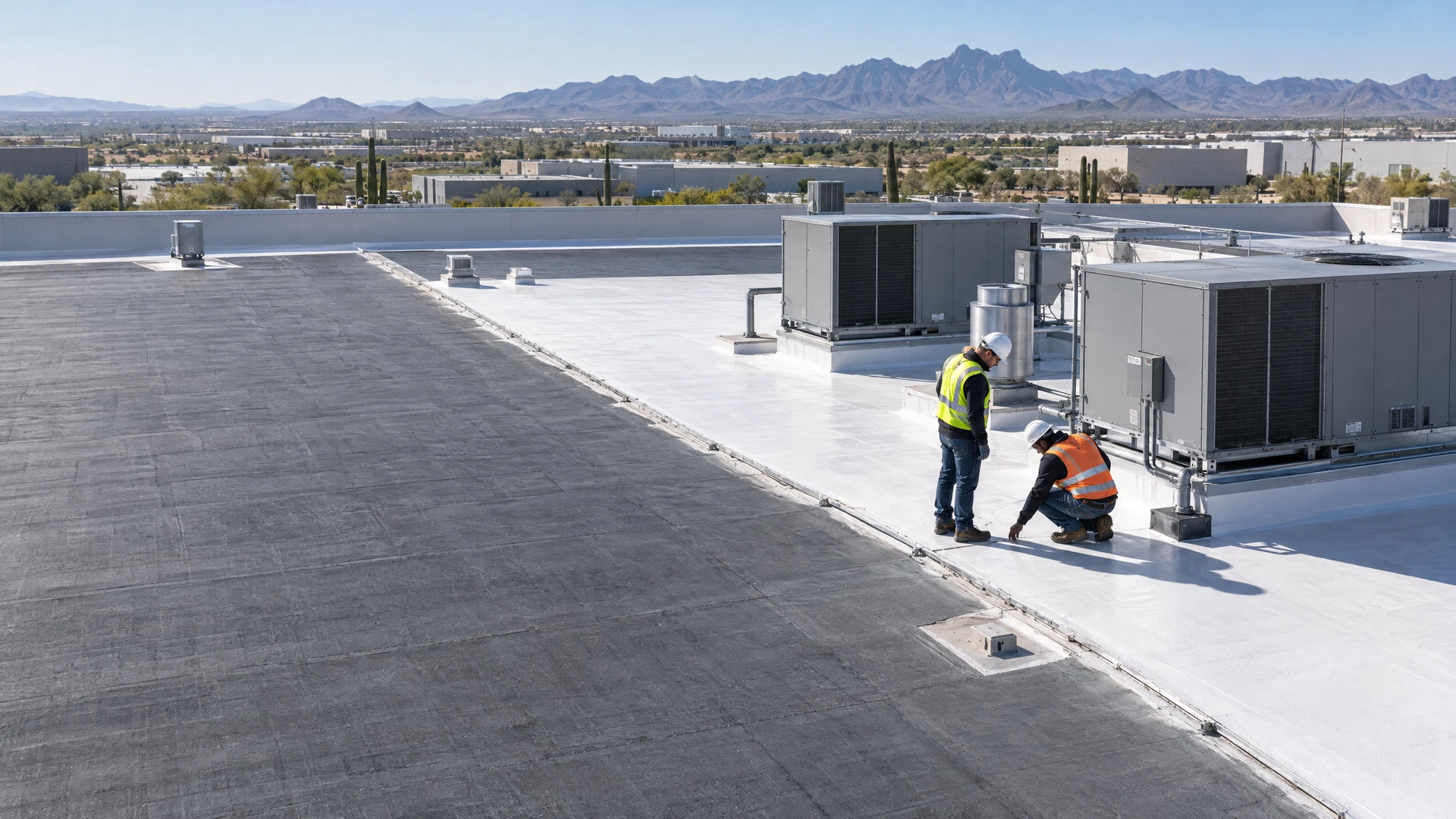
The City reports 783 businesses and 41,620 jobs in Price Corridor, along with office and industrial/flex space. Those figures describe the district, not a contractor’s capacity or a uniform roof condition. They reinforce why the roof, equipment, access, and building schedule should be reviewed property by property.
Local planning reference: City of Chandler Price Corridor Business District.
Office and campus roofs can include dense HVAC, telecom, pipe, curb, drain, and service-route details. A roof plan should preserve necessary maintenance access.
Light-industrial and flex roofs may have metal, membrane, prior-coating, or mixed sections. Each surface needs its own repair and system-compatibility review.
Ponding, wet areas, leaks, drain condition, scuppers, blisters, and detail failures should be investigated before restoration is assumed.
Tenant schedules, security, deliveries, roof hatches, loading, protected areas, and equipment servicing affect the work sequence even when the roof field looks straightforward.
Inspection Detail
For Price Corridor Roof Coating, the roof walk connects office and campus equipment, flex and industrial assemblies, water and moisture checks, and occupancy and access. A roof field can look serviceable from the ground while the water entry or repair boundary sits at a curb, drain, edge, seam, fastener, or equipment transition. Dividing the roof into field areas and detail zones helps place repair work where it belongs before a coating system is considered.
The material decision stays tied to what is actually on the building. The selected system needs a stable surface, an honest repair scope, workable access, and conditions that meet its product requirements. When a roof has more than one material or repair history, the review can identify where preparation changes between sections rather than treating the whole property as one surface.
Restoration Decision
Coating benefits should be tied to a roof that is actually ready for the selected work. Preparation, repair, drainage, system fit, application, and future maintenance remain part of the result.
A thorough roof review gives a Price Corridor property team a way to compare restoration with other roof options based on actual conditions instead of broad material claims.
If the existing roof is a qualified candidate, a liquid-applied restoration system may allow much of the assembly to remain in place. The repair needs, moisture findings, and system direction decide whether that path is appropriate.
A system-specific detail plan can include seams, flashings, curbs, penetrations, drains, equipment interfaces, and access paths before field coating is applied.
System Selection
Commercial Roof Coating Options for Chandler include Metal Roof Coating, Silicone Roof Coating, Acrylic Roof Coating, Spray Foam Roofing, and Shingle Roof Coating. An office roof and an industrial roof are not assumed to have the same assembly. Silicone and acrylic products address different system conditions. Metal restoration requires attention to panels and fasteners. SPF is a separate roofing system. Shingle discussion is limited to a supported assembly review.
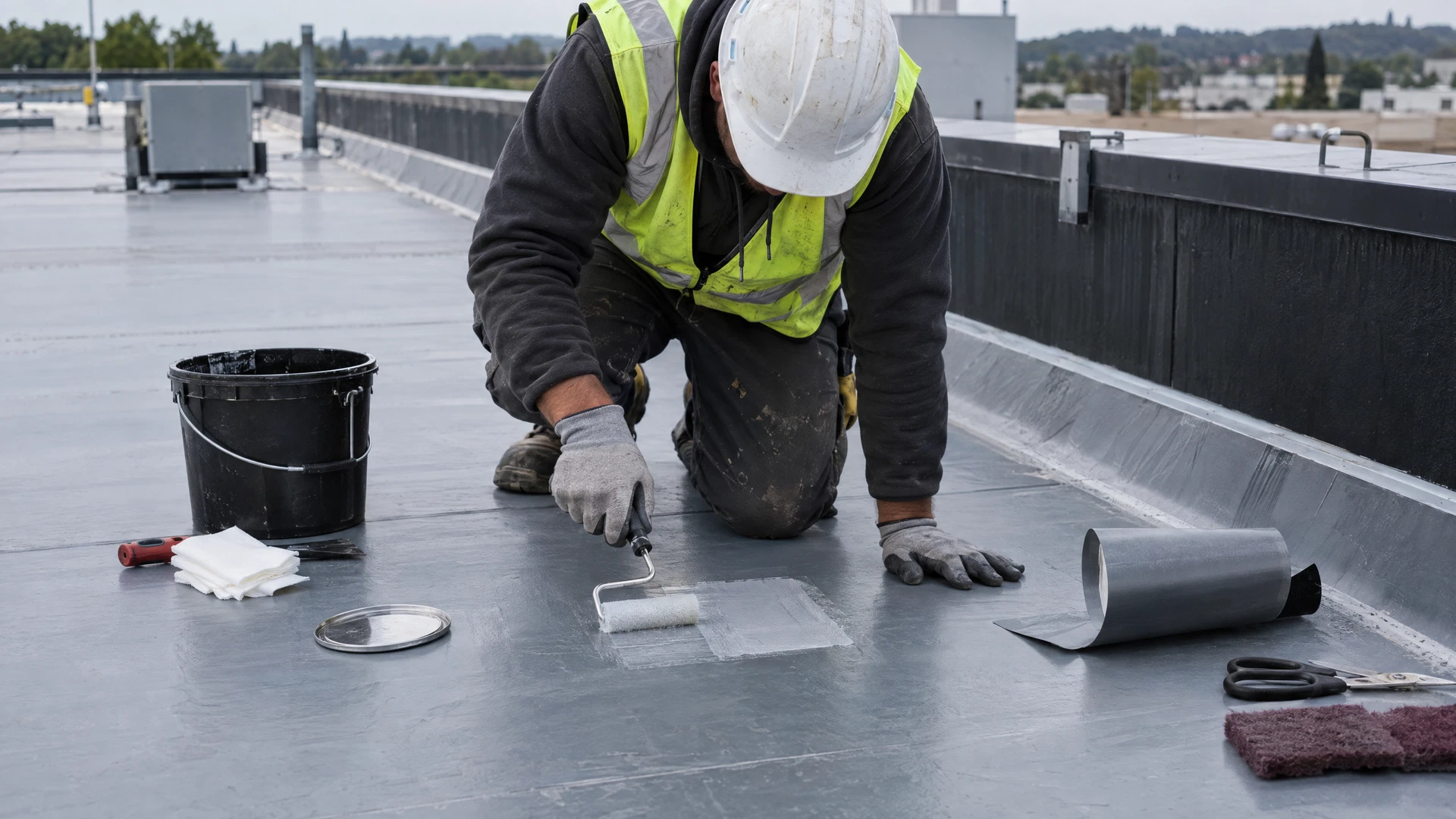
Office and campus roofs can include dense HVAC, telecom, pipe, curb, drain, and service-route details. A roof plan should preserve necessary maintenance access. The selected material also needs to account for flex and industrial assemblies and water and moisture checks.
For commercial metal panels with seams, fasteners, corrosion, and penetration details that need review before restoration.
For suitable low-slope roof assemblies where substrate condition, drainage, and detail work guide the system choice.
For compatible commercial roofs that need a product-specific review of surface preparation, weather, and reflective finish options.
For a spray-applied roofing system that requires controlled substrate preparation, equipment protection, and a protective topcoat.
For a careful commercial assembly review when asphalt shingles or another shingle-like surface is part of the roof decision.
Work Sequence
The scope starts with the roof you have and follows a clear sequence through inspection, repairs, preparation, detailing, and system-specific application.
Identify the roof assembly, previous coatings, leaks, seams, fasteners, flashing, drains, curbs, penetrations, equipment, traffic patterns, repair history, and access constraints.
Separate dry, attached, repairable areas from wet, loose, damaged, or incompatible areas. Compare the roof with selected product requirements before material is chosen.
Complete needed repair work at panels, seams, flashing, drains, curbs, penetrations, and equipment transitions. Give water-entry details their own scope.
Coordinate roof access, tenant and visitor movement, deliveries, security, loading, equipment service, air intakes, vehicles, and staging before work begins.
Apply the selected system under its product requirements and review coverage, details, drains, and ongoing access after the work is completed.
Active Property Planning
The Price Corridor’s documented mix of office, executive, light-industrial, mixed-use, and campus properties supports an operational planning mindset. It does not mean every building has the same roof or work restrictions.
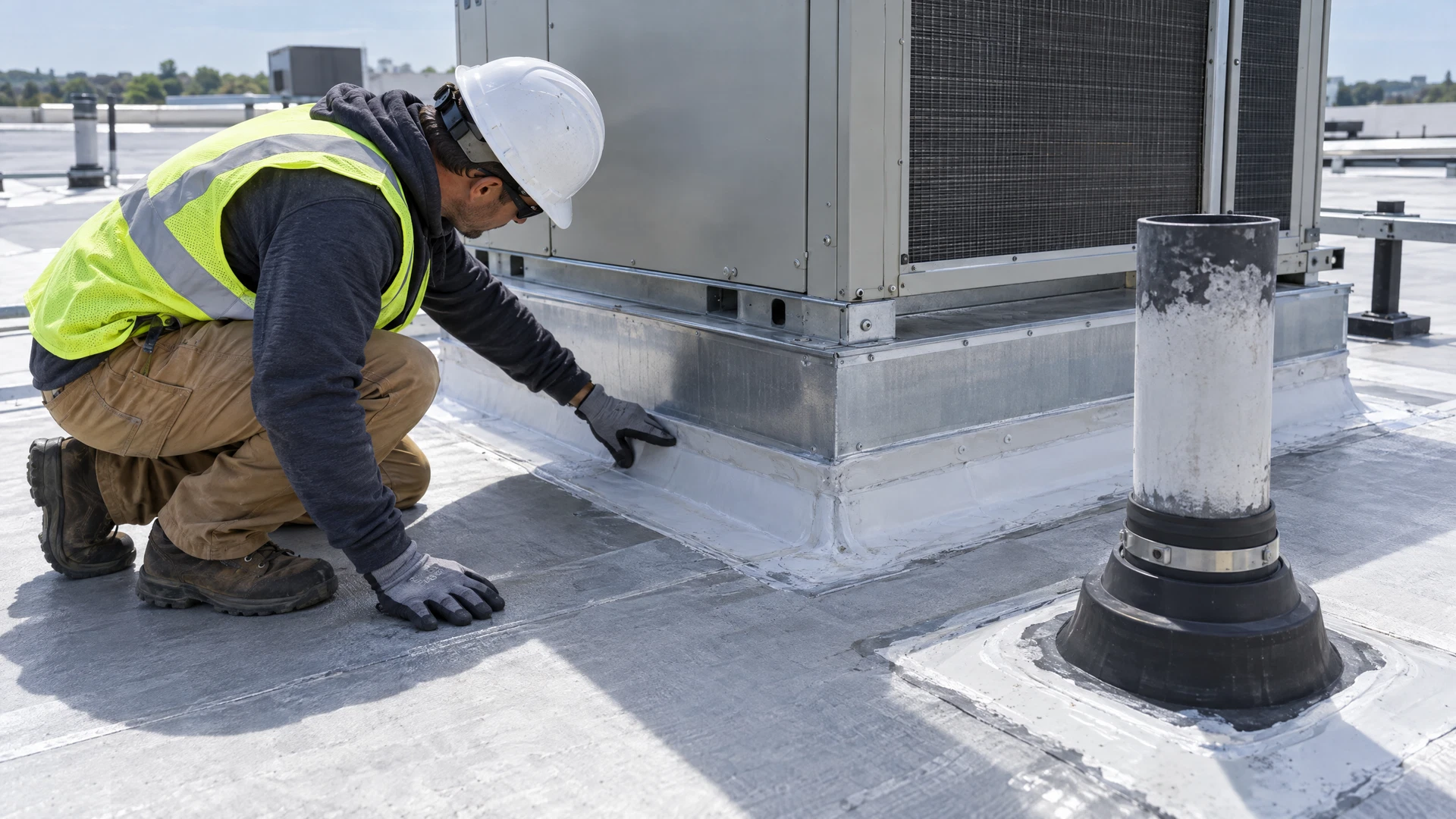
A facility manager can help define the scope by identifying building-sensitive zones, tenant obligations, roof-access rules, rooftop service cycles, delivery patterns, and known water-entry locations early in the discussion.
Common Roof Questions
The answer depends on the roof assembly and conditions. These questions help identify what should be inspected before work is selected.
No. The roof needs a condition and compatibility review. Material type, moisture, adhesion, damage, repairs, drainage, details, and product direction determine whether coating can be considered.
Those are repair items. Fasteners, panels, seams, sealant, flashing, penetrations, and water-entry details should be corrected before a coating is applied to the roof field.
It should prompt a drainage and roof-condition review. A selected system may have different water-exposure properties, but the underlying reason for ponding still matters.
Wet areas should be identified and addressed before coating. A surface treatment should not conceal moisture in the existing assembly.
They need specific access, repair, drainage, flashing, curb, and protection planning. They should not be treated as an afterthought to field application.
Commercial Properties Only
Discuss the commercial roof, known problem areas, equipment access, drainage, and building schedule. The selected work follows the roof inspection and system requirements.